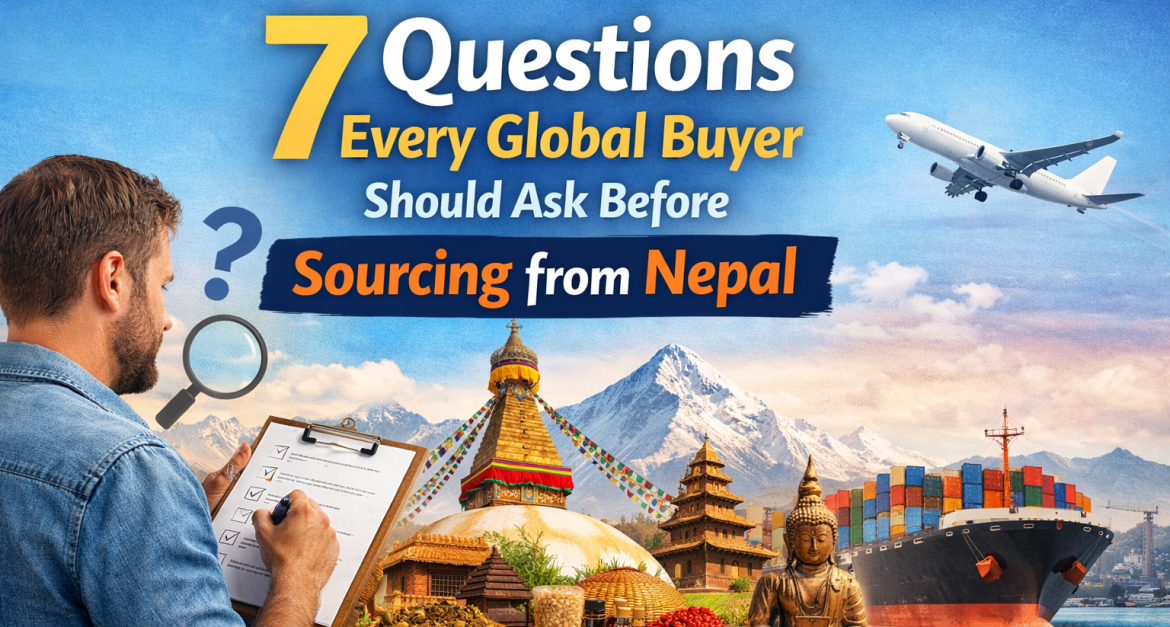
7 Questions Every Global Buyer Should Ask Before Sourcing from Nepal
If you are considering sourcing from Nepal, asking the right questions early can save time, reduce risk, and help you build a better supply chain. Nepal is known for its handmade products, natural materials, agricultural goods, and ethical production stories. But like any sourcing destination, success depends on choosing the right supplier, understanding product quality, and managing communication clearly.
For many international buyers, the challenge is not finding products. The real challenge is finding a dependable partner who can deliver consistent quality, meet deadlines, and understand export requirements. That is why smart buyers do not start with price alone. They start with the right questions.
In this blog, we will cover seven practical questions every buyer should ask before sourcing from Nepal. These questions will help you make stronger decisions, avoid common mistakes, and create a more reliable sourcing process.
Can the supplier prove product quality consistently?
A beautiful sample is not enough. What matters most is whether the supplier can deliver the same quality again and again. Before you place an order, ask for sample details, product specifications, and photos or videos of recent production.
Consistency is especially important if you are building a brand. Customers expect the same look, feel, size, and finish every time they buy. If the supplier cannot explain how quality is maintained during production, that is a warning sign.
Look for clear answers about raw materials, production steps, finishing, and final checks. A serious supplier will not hesitate to explain how they maintain standards.
Is the supplier experienced with export orders?
Exporting is different from selling locally. A supplier may produce good products but still struggle with export documents, packaging standards, labeling, or timelines. That is why it is important to ask whether they have handled international orders before.
A supplier with export experience is more likely to understand the expectations of overseas buyers. They are usually more prepared for communication, documentation, and shipping coordination. They also tend to be more careful about product presentation and packing.
If you are sourcing from Nepal for the first time, working with a supplier who understands export requirements can make the entire process smoother.
What is the minimum order quantity?
Minimum order quantity, or MOQ, is one of the most important questions in sourcing. Some suppliers prefer large orders, while others are flexible with smaller quantities. If you do not confirm this early, you may waste time discussing products that do not match your business needs.
Ask the supplier what their MOQ is for samples, trial orders, and bulk orders. Also ask whether the MOQ changes based on product type, customization, or packaging.
For startups and small brands, flexible MOQs are often a major advantage. They allow you to test the market before committing to a large purchase. For bigger buyers, it helps to know the supplier’s production capacity from the beginning.
How does the supplier handle communication and updates?
Good sourcing depends on clear communication. If replies are delayed, instructions are misunderstood, or product details are vague, problems will appear later in production.
A reliable supplier should be responsive, professional, and able to explain things simply. They should confirm order details in writing, share updates when needed, and answer questions without confusion.
This is especially important when you are sourcing from another country. Time zones, language differences, and shipping timelines can create delays if communication is weak. A supplier who communicates well gives you confidence throughout the process.
Can the supplier customize products for your brand?
Many buyers do not want generic products. They want items that reflect their own brand identity. That may include private labeling, custom packaging, product adjustments, or unique design details.
Before moving forward, ask what level of customization is possible. Some suppliers can change packaging and branding easily. Others may also adjust ingredients, colors, sizes, or materials depending on the product.
Customization is a major advantage when sourcing from Nepal because it allows your brand to stand out. Whether you are buying handcrafted goods, natural products, or specialty items, custom options can turn a basic product into something more market-ready.
What is the supplier’s process for quality control?
Quality control is not something to ask about at the end. It should be part of the conversation from the beginning. Ask how the supplier checks products before shipping, how defects are handled, and whether there is a final inspection stage.
A good supplier should have a clear process for identifying issues before goods leave the factory or workshop. This may include in-house checks, sample approval, batch inspection, or final packing review.
When a supplier has a strong quality control process, you reduce the chance of returns, complaints, and unnecessary losses. For international buyers, that protection is extremely valuable.
What support is available after the order is placed?
Many buyers focus only on the first step: finding a supplier. But the real value often comes after the order begins. Ask whether the supplier will support you with production updates, packaging confirmation, shipping coordination, and problem solving if needed.
A sourcing partner should not disappear after receiving the order. They should remain available to help manage the process and respond quickly if something changes.
This matters even more when you are working across borders. Delays, product changes, and shipping issues can happen. A supplier who stays involved makes the process easier and helps build long-term trust.
Why these questions matter
Sourcing from Nepal can be a smart move for businesses that value unique products, skilled craftsmanship, and authentic sourcing stories. But the best results come from asking the right questions before you place an order.
These seven questions help you do more than compare prices. They help you assess reliability, communication, flexibility, and long-term fit. That is what separates a one-time transaction from a strong sourcing relationship.
When you choose the right supplier, you save time, reduce risk, and improve the chance of receiving products that match your expectations. That is especially important if you are building a brand that depends on consistency and trust.
How Sourcing Nepal can help
At Sourcing Nepal, we help buyers connect with trusted suppliers and simplify the sourcing process. From supplier verification to quality control and export support, our goal is to make sourcing from Nepal easier, safer, and more efficient.
If you are planning to source products from Nepal, starting with the right questions is the smartest first step. It helps you avoid uncertainty and move forward with clarity.
Conclusion
Sourcing from Nepal offers real opportunity, but only when the process is handled carefully. Ask about quality, export experience, MOQ, communication, customization, quality control, and post-order support. These questions will give you a much clearer picture of whether a supplier is the right fit.
In a competitive market, the buyers who ask better questions usually make better sourcing decisions.
📩 Ready to import from Nepal?
Contact us today for samples, pricing, or consultation:
🔗 www.sourcingnepal.com
📧 sourcing@sourcingnepal.com
📞 +977-9823900499