

Raw Himalayan Honey, from Terai to Treeline
Four distinctive honeys from Nepal: Himalayan Wild (cliff) honey, Himalayan Multiflora, Chiuri (butter tree) and Litchi. Each is shaped by its altitude, flowers, bee species and harvesting tradition. All are traceable to origin, lab tested for your market, and available in bulk, retail jars or private label.

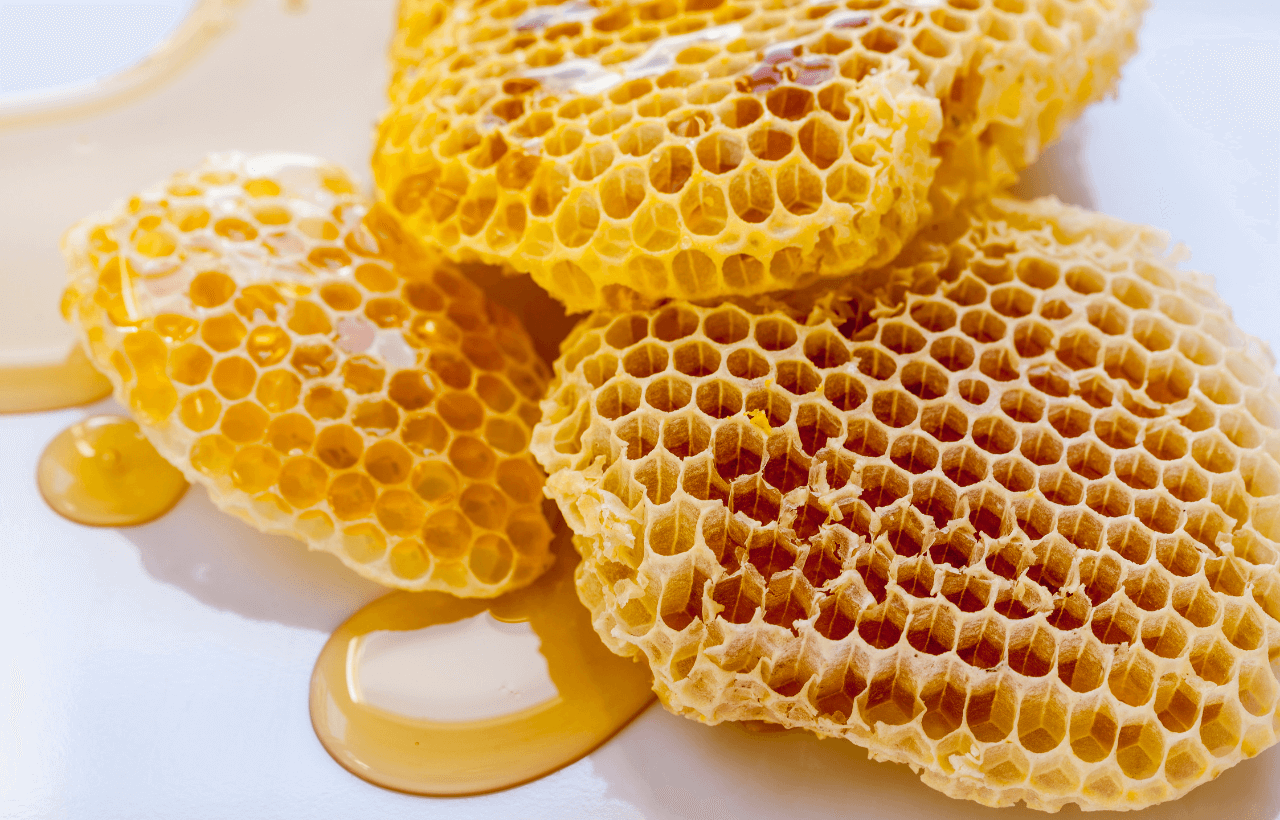
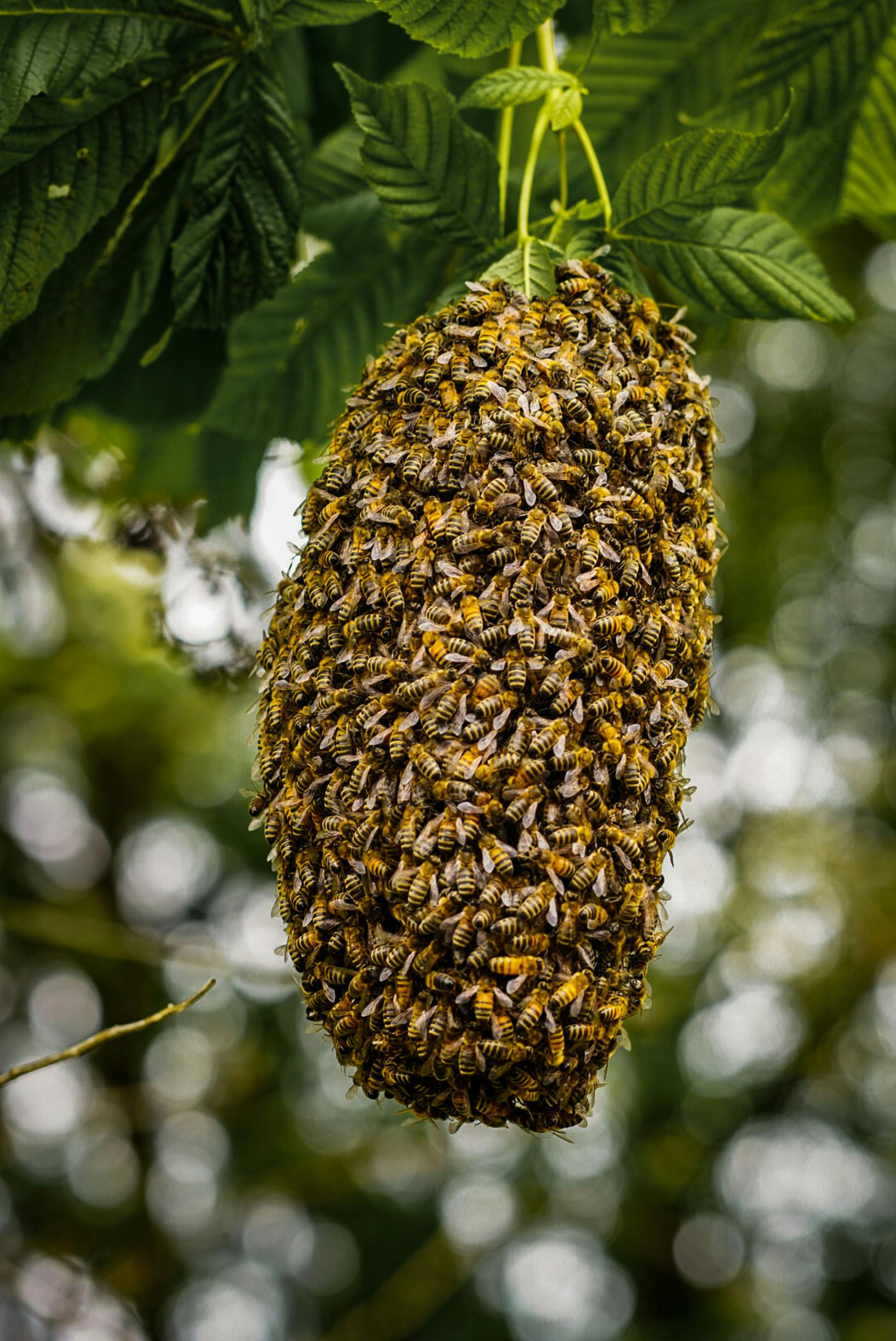
honeys
A Whole Country of Flowers, Stacked by Altitude
Nepal rises from the lowland Terai to the high Himalaya in less than 200 km, which supports many honeybee species and an exceptional variety of nectar plants. Litchi orchards in the plains, chiuri trees in the mid-hills, wildflower forests and rhododendron-covered cliffs each give honey its own colour, flavour, texture and season.
We work with local beekeepers, migratory chiuri producers and traditional honey-hunting communities. We focus on authentic origin, responsible sourcing, traceability and quality, and on preserving traditional beekeeping knowledge.
Where Each Nepali Honey Comes From
Altitude decides which flowers bloom and which bees live there, and together they shape each honey. This is how our collection maps onto Nepal's landscape.
Four Distinctive Nepalese Honeys
From wild Himalayan cliffs and mountain flora to native chiuri forests and Terai litchi orchards, each honey has its own floral origin, bee species, region and season.
Himalayan Wild Honey
Himalayan Cliff HoneyA naturally wild honey shaped by Himalayan altitude, seasonal flowers and the honey-hunting heritage.
- Bee species
- Apis laboriosa (Himalayan giant honey bee); Apis dorsata may also contribute
- Source
- Wild colonies on mountain cliffs and in natural habitats
- Altitude
- ~800–4,100 m recorded in Nepal (mostly 1,000–3,000 m)
- Key areas
- Lamjung, Kaski, Gorkha, Myagdi, Khotang and other Himalayan / mid-hill areas
- Floral sources
- Rhododendron, Himalayan wildflowers, forest plants
- Harvesting
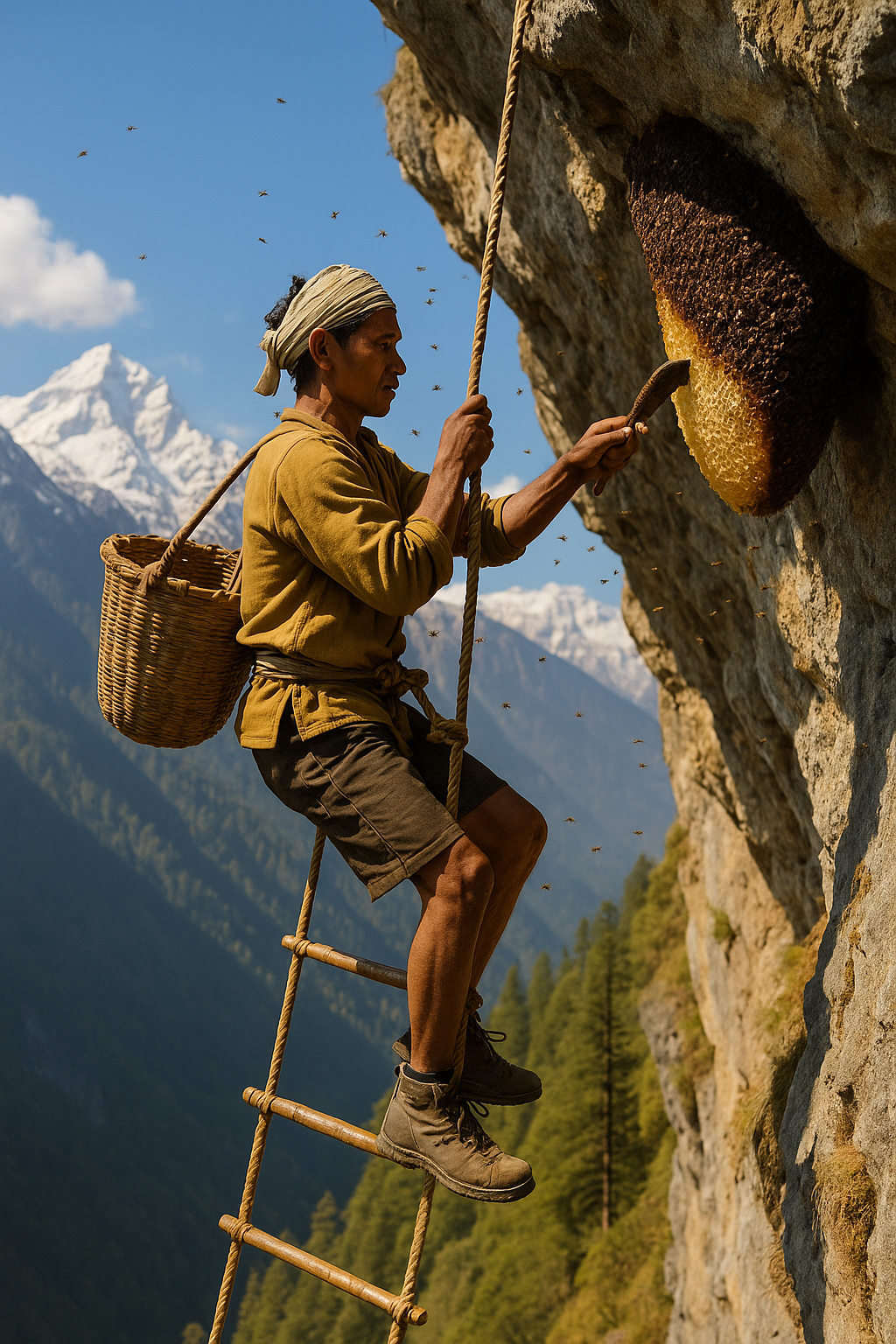
- Traditional wild honey hunting by Gurung and other mountain communities
- Colour · Taste
- Amber to dark amber · rich, floral, earthy, sometimes herbal
- Texture
- Liquid to moderately crystallised
- Season
- Seasonal; depends on altitude, flowering and bee migration
Himalayan Multiflora Honey
Nepal's floral biodiversity in a jarA naturally diverse honey that reflects Nepal's floral biodiversity rather than a single crop.
- Bee species
- Mainly Apis cerana and/or Apis mellifera; wild multiflora may involve other native species
- Source areas
- Himalayan foothills, mid-hills, forest margins, agricultural landscapes
- Altitude
- Variable, across Nepal's hill and mountain beekeeping zones
- Floral sources
- Wildflowers, forest plants, herbs, shrubs, seasonal blossoms
- Production
- Managed or semi-managed beekeeping
- Colour · Taste
- Light to dark amber · balanced, floral, mildly sweet
- Aroma
- Rich floral
- Season
- Follows local flowering cycles
Chiuri (Butter Tree) Honey
Diploknema butyraceaA distinctive Nepalese monofloral honey from the native chiuri tree, closely tied to local mountain communities.
- Bee species
- Mainly managed Apis cerana and other local honeybees
- Altitude
- Chiuri tree ~400–1,400 m; Pyuthan production ~1,000–1,800 m
- Source areas
- Mid-hills and Sub-Himalayan regions, notably Pyuthan
- Floral source
- Primarily chiuri flowers
- Harvesting
- Migratory hives moved among flowering chiuri trees; traditional extraction
- Colour · Taste
- Light to medium amber · smooth, sweet, distinctive
- Texture
- Fine-grained, tends to crystallise
- Season
- Chiuri flowering period
Litchi Honey
Lychee honey · Litchi chinensisA delicate seasonal honey from flowering litchi orchards, with a characteristic floral, fruity profile.
- Bee species
- Mainly Apis mellifera and Apis cerana
- Zone
- Terai, Inner Terai and some mid-hill areas, generally up to ~800 m
- Key districts
- Siraha, Saptari, Udayapur, Sarlahi, Mahottari, Dhanusha, Bara, Parsa, Rautahat, Chitwan, Nawalparasi, Kapilvastu, Rupandehi
- Harvesting
- Managed colonies placed near flowering orchards
- Colour · Taste
- Light amber to golden · delicate, sweet, fruity-floral
- Aroma
- Light, fresh, aromatic
- Season
- Litchi flowering season
Also on request: other seasonal Nepali honeys, such as buckwheat and Himalayan acacia, subject to availability.
From Golden to Dark Amber
Honey is traded on the Pfund colour scale. Lighter honeys are usually milder, and darker ones bolder and more complex. The bars show the typical colour range of each honey in our collection.
White
White
Amber
Amber
Amber
Three Ways Our Honey Is Harvested
Each honey in our collection follows the harvesting tradition that suits its bees and flowers.
Traditional Honey Hunting
Himalayan Wild HoneyApis laboriosa builds large, exposed combs under rocky cliffs. Skilled hunters from Gurung and other mountain communities reach them with specialised climbing equipment and techniques.
Migratory Hives
Chiuri HoneyProducers move their hives among chiuri trees during flowering, then extract the honey traditionally.
Managed Colonies
Litchi & Multiflora HoneyColonies are placed near flowering litchi orchards or in diverse hill landscapes and managed by local beekeepers.
From Hive to Jar: How We Keep It Raw
Ethical Beekeeping
We partner with local beekeepers who use sustainable, low-chemical hive management.
Ripe-Frame Harvest
Only capped, mature combs are taken, and wild colonies are harvested responsibly.
Cold Extraction
Combs are uncapped and spun or pressed without high heat, so enzymes stay intact.
Gentle Straining
Coarse straining removes wax and debris but keeps the natural pollen in.
Settling & Moisture Check
Honey settles in food-grade tanks and is checked for moisture to prevent fermentation.
Lab Testing
Batch samples are tested for purity, residues and quality parameters at accredited labs.
Packing
Filled into food-grade drums, pails or glass jars, batch-coded and sealed.
Real Raw Honey vs. the Cheap Stuff
Honey is one of the most frequently adulterated foods in the world. Here is what we deliver, and what we test to keep out.
✓ What you get from us
- 100% honey made by bees, with nothing added
- Natural pollen kept, so floral origin can be verified
- No high-heat processing, so enzymes like diastase stay active
- Traceable to region, season and batch
- Lab report (COA) with every batch
✗ What we test to keep out
- Added sugar syrups (rice, corn, cane or beet)
- Ultra-filtered honey with the pollen removed to hide its origin
- Overheated honey with high HMF
- Antibiotic and pesticide residues
- High moisture that leads to fermentation
Crystallisation is a good sign. Raw honey naturally turns solid or creamy over time. Chiuri honey has a fine-grained crystallising tendency, while Himalayan Wild Honey can range from liquid to moderately crystallised. It does not mean the honey has spoiled or been adulterated. To return it to liquid, warm the jar gently in a water bath below 40 °C.
Tested to International Honey Standards
We test against the Codex Alimentarius honey standard and the rules of your destination market, through accredited laboratories. See our product testing service.
Moisture
Prevents fermentation in transit and on the shelf.
HMF (mg/kg)
A low value confirms the honey is fresh and not overheated.
Diastase (Schade)
An active enzyme that signals raw, minimally processed honey.
Fructose + Glucose
Per 100 g. A key marker of genuine blossom honey.
Sucrose
Per 100 g. Higher levels can point to feeding or adulteration.
Water-Insolubles
Per 100 g. Confirms clean straining.
Free Acidity (meq/kg)
Confirms the honey has not started to ferment.
Pollen Analysis
Checks the floral and geographic origin claimed on the label.
Parameters shown are Codex Alimentarius (CXS 12-1981) limits for blossom honey. Your contract can set tighter targets. Honey must not be given to infants under 12 months.
From Bulk Drums to Gift Boxes
Bulk Raw Honey
For packers, food manufacturers and distributors, in food-grade lined drums or pails.
25 kg pails · 300 kg drumsRetail Glass Jars
Premium glass jars that show off the honey's colour and clarity, ready for shelves.
250 g · 500 g · 1 kgCreamed Honey
Smooth, spreadable set honey, made from naturally fine-crystallising honeys such as chiuri.
Jars & tubsComb Honey
Honey in its original beeswax comb, a premium gourmet and gift item.
Cut comb · Frames, on requestGift Sets
Multi-variety tasting sets in eco packaging, popular in Europe, North America and Japan.
Seasonal & corporate giftingPrivate Label
Your brand on our honey, with custom jars, labels and compliant on-pack text.
Flexible MOQHimalayan Honey Specifications
These are typical export specifications. Final limits are agreed per variety in your contract.
| Product | |
| Product | Natural Nepalese Honey: Himalayan Wild, Himalayan Multiflora, Chiuri, Litchi |
|---|---|
| Origin | Nepal, traceable to region (e.g., Lamjung, Kaski, Pyuthan, Chitwan, Siraha) |
| Bee species | Apis laboriosa, Apis dorsata (wild); Apis cerana, Apis mellifera (managed), by variety |
| Colour range | Light amber / golden (Litchi) to dark amber (Himalayan Wild) |
| Physical state | Liquid to naturally crystallised (varies by variety and storage) |
| Quality (Codex CXS 12-1981) | |
| Moisture | ≤ 20% |
| HMF | ≤ 40 mg/kg |
| Diastase activity | ≥ 8 Schade units |
| Fructose + glucose | ≥ 60 g/100 g |
| Sucrose | ≤ 5 g/100 g |
| Water-insoluble solids | ≤ 0.1 g/100 g |
| Free acidity | ≤ 50 meq/kg |
| Residues & contaminants | Antibiotics, pesticides and heavy metals within destination-market limits (per COA) |
| Packing & Logistics | |
| Bulk packing | 25 kg food-grade pails; 300 kg lined steel drums |
| Retail packing | Glass jars 250 g / 500 g / 1 kg, or custom private label |
| Shelf life | 24 months from packing in sealed containers, stored cool and dry |
| HS code (indicative) | 0409.00 (natural honey) |
| Documents | COA, Certificate of Origin, health certificate where required, invoice & packing list |
| MOQ & samples | Flexible MOQ; samples available for evaluation |
From the Himalaya to Your Shelf
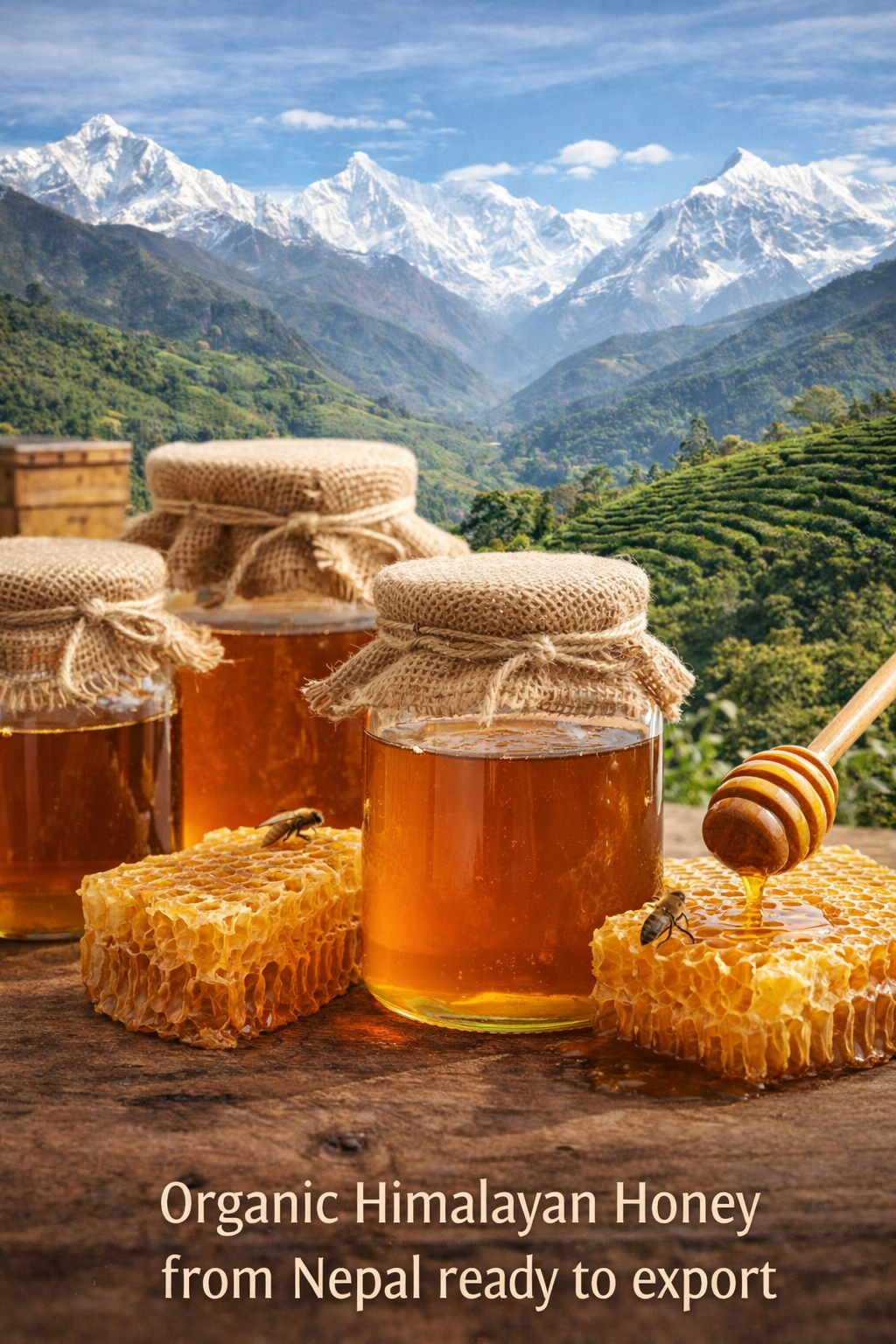

Launch Your Own Himalayan Honey Brand
Single-origin Himalayan honey is a premium story buyers love. We handle everything in Nepal so you receive shelf-ready jars.
- Jar, lid & label options
- Label design & printing
- Compliant on-pack wording
- Batch coding & COA
- Gift boxes & tasting sets
- Door-to-door shipping
Related Products & Services
Ready to Source Honey from Nepal?
Tell us the variety, volume, packaging and destination. We'll send samples, lab data and a tailored export quote.
Request Samples & QuoteFrequently Asked Questions
What makes Himalayan honey from Nepal different?
Nepal's geography, from the lowland Terai to the high Himalaya, supports diverse honeybee species and a wide variety of nectar plants. That creates distinct honeys whose character depends on altitude, floral source, bee species, season and harvesting method. Our collection runs from wild Himalayan cliff honey to chiuri and litchi honey.
Which honey varieties do you supply?
Our collection includes four honeys: Himalayan Wild Honey (cliff honey from Apis laboriosa), Himalayan Multiflora Honey, Chiuri (Butter Tree) Honey and Litchi Honey. Multiflora is the most readily available. Wild, Chiuri and Litchi honey are seasonal and limited.
What is Himalayan Wild (cliff) Honey?
It is honey from wild colonies of the Himalayan giant honey bee (Apis laboriosa), which builds large exposed combs beneath rocky cliffs at about 800–4,100 m in Nepal. Gurung and other mountain communities harvest it through traditional honey hunting. It is amber to dark amber, with a rich, floral, earthy and sometimes herbal taste.
What is Chiuri honey?
Chiuri honey is a Nepalese monofloral honey from the flowers of the native chiuri or butter tree (Diploknema butyracea). It is produced in the mid-hills and Sub-Himalayan regions, notably Pyuthan, by producers who move their hives among flowering chiuri trees. It is light to medium amber, smooth and sweet, with a fine-grained crystallising texture.
Where does your Litchi honey come from?
Litchi honey is produced when bees forage mainly on litchi blossoms in Nepal's Terai and Inner Terai, in districts such as Siraha, Saptari, Sarlahi, Mahottari, Dhanusha, Bara, Parsa, Chitwan, Nawalparasi, Kapilvastu and Rupandehi. It is light amber to golden, with a delicate, sweet, fruity-floral flavour.
Why has my honey crystallised?
Crystallisation is a natural sign of real, raw honey and does not mean it has spoiled. Chiuri honey crystallises readily into a fine grain, while Himalayan Wild Honey can range from liquid to moderately crystallised. To make it liquid again, warm the jar gently in a water bath below 40 °C.
How do you test for purity and safety?
We arrange testing through accredited laboratories. Tests cover the Codex quality parameters (moisture, HMF, diastase, sugars), C4 sugar isotope analysis and NMR profiling for authenticity, pollen analysis for origin, and screening for antibiotic and pesticide residues. Himalayan Wild Honey, which can include rhododendron nectar, is also screened for grayanotoxins.
Do you supply "mad honey"?
Mad (red) honey contains high levels of naturally occurring grayanotoxins and is restricted or regulated in many countries. We do not sell it as a standard product. Our Himalayan Wild Honey is screened for grayanotoxins before export, and any special request is handled case by case, only where it is legal in the destination market.
What packaging, MOQs and documents do you offer?
We offer bulk honey in 25 kg pails and 300 kg drums, retail glass jars in 250 g, 500 g and 1 kg, comb honey, creamed honey, gift sets and full private label, with flexible MOQs and samples. Each shipment comes with a Certificate of Analysis, Certificate of Origin, health certificate where required, invoice and packing list.
Request Himalayan Honey Samples & a Quote
Share your requirements and our team will reply within 24 hours with samples, lab data and a tailored export quote.
Contact Our Team WhatsApp Us