- Home
- About
- Products
- Services
- Our Services – Certification & Audit Consultation
- Sustainable, Ethical Sourcing & Compliance
- Production scheduling and Expediting
- Supplier Verification
- Product Testing
- Quality Control
- Sample Development
- Packaging Sourcing & Development
- Drop Shipping & Amazon Fulfillment
- International Logistics
- Impact Reporting
- Branded Merchandise
- Product Photography
- Vendor Enrollment
- Policies
- Blog
- Contact Us
- Home
- About
- Products
- Services
- Our Services – Certification & Audit Consultation
- Sustainable, Ethical Sourcing & Compliance
- Production scheduling and Expediting
- Supplier Verification
- Product Testing
- Quality Control
- Sample Development
- Packaging Sourcing & Development
- Drop Shipping & Amazon Fulfillment
- International Logistics
- Impact Reporting
- Branded Merchandise
- Product Photography
- Vendor Enrollment
- Policies
- Blog
- Contact Us

Buffalo Jerky (Sukuti): Sourcing Nepal’s Halal, Export‑Quality Super‑Snack
- Sourcing Nepal | Best Sourcing Company in Nepal
- Sourcing Facts
- Buffalo Jerky (Sukuti): Sourcing Nepal’s Halal, Export‑Quality Super‑Snack
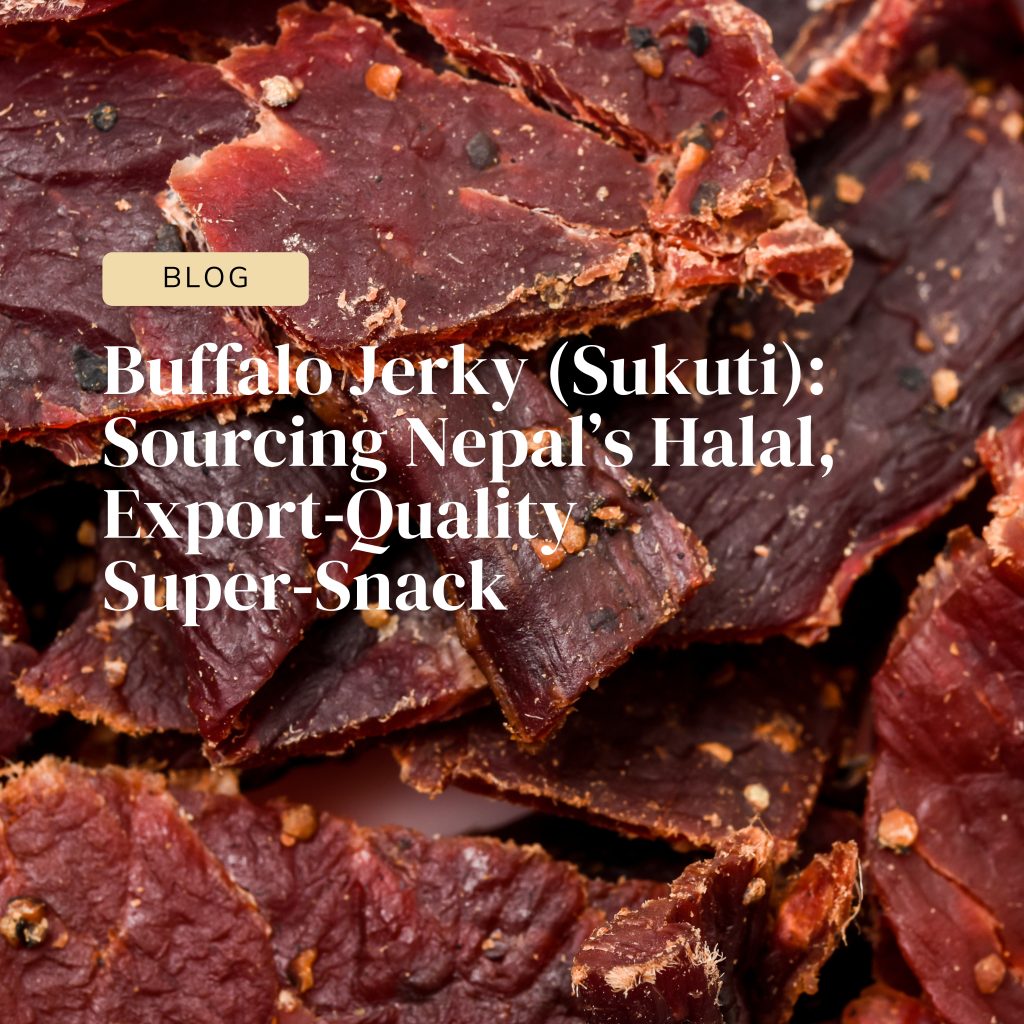
Buffalo Jerky (Sukuti): Sourcing Nepal’s Halal, Export‑Quality Super‑Snack
Introduction: From Tradition to Global Trade
Buffalo jerky, locally known as sukuti, has been a household staple in Nepal for centuries. Preserved through drying and seasoning, it offers a chewy texture, smoky aroma, and rich nutrition. In the hilly and mountainous regions of Nepal, drying meat under the sun or fire was the most reliable preservation method.
Today, sukuti is no longer confined to village kitchens. With Nepal’s Rs 27 billion buffalo meat export project to China, and increasing interest in ethical sourcing from Nepal, buffalo jerky has the potential to grow from a cultural delicacy into an export-quality halal-certified product for international markets.
The Making of Buffalo Jerky (Sukuti)
1. Sun-Dried Buffalo Jerky: Thin strips of buffalo meat are dried naturally under sunlight for several days. This method, used for generations, is chemical-free, handmade in Nepal, and retains the natural flavors of the meat.
2. Smoked Buffalo Jerky: A festival favorite, smoked sukuti is dried above a woodfire. The result is a rich, smoky taste, often enjoyed during Dashain and Tihar. This version carries cultural significance while extending shelf life.
3. Modern Dehydrated Jerky: With Nepal’s growing export ambitions, many verified suppliers in Nepal use industrial dehydrators to ensure hygiene, consistency, and international standards. This process makes buffalo jerky suitable for bulk export from Nepal and private label partnerships abroad.
Nutritional Power of Buffalo Meat
Buffalo meat is widely recognized as a healthier red meat alternative:
- 140 calories per 3-ounce serving
- 26 grams protein
- 3 grams fat
- High in iron, zinc, vitamin B6, and B12
- Lower in cholesterol and saturated fat than beef
Benefits at a Glance:
- Rich in Nutrients – boosts energy and immunity
- Higher Protein, Lower Fat – ideal for fitness and health-focused consumers
- Better for the Environment – buffalo farming in Nepal is often grass-fed and free-range, supporting ethical sourcing Nepal practices
- Versatile Flavor – distinct umami and smoky notes
From buff momos to grilled dishes and curries, buffalo meat has always been central to Nepali cuisine. Sukuti is simply its preserved, portable, and export-quality counterpart.
The Halal Certified Buffalo Jerky Advantage
The Halal Advantage: For buffalo jerky to succeed globally, halal certification is essential.
Why Halal Matters:
- Expands reach to Muslim-majority countries (Malaysia, Indonesia, UAE, Saudi Arabia).
- Ensures compliance with international buyers seeking ethical sourcing and transparent supply chains.
- Increases trust and credibility for best sourcing companies in Nepal looking to export meat snacks.
With the global halal food market worth over $2 trillion, halal-certified sukuti positions Nepal as a serious contender in international meat trade.
Nepal’s Buffalo Meat Export Drive
In June 2025, Nepal secured a Rs 27 billion investment from China to boost buffalo meat production. The plan includes:
- Setting up disease-free rearing zones
- Establishing modern processing plants
- Exporting up to 5,000 tonnes of buffalo meat daily
- Creating a $1.5 billion annual export opportunity
Why Nepal is Competitive in Sourcing
- Sourcing from Nepal means access to lean, naturally raised buffalo meat.
- Best sourcing companies in Nepal are adopting modern practices while retaining traditional authenticity.
- With international logistics Nepal improving, exports are faster and more reliable.
- Buyers can work with private label Nepal services to develop branded halal jerky for global markets.
- Transparency from verified suppliers Nepal ensures compliance with global quality standards.
Compared to India and Pakistan, Nepal has the advantage of fresh investment, halal-focused certification, and a cleaner brand identity in buffalo meat products.
Ethical Sourcing & Sustainability
One of Nepal’s strengths lies in ethical sourcing practices. Many buffaloes are raised in natural pastures, with minimal industrial farming, making the meat more sustainable.
For international buyers looking for export-quality meat snacks with traceability, Nepal offers:
- Traditional handmade processing (sun-dried, smoked)
- Scalable bulk production through modern dehydration
- Supply chains that combine bulk export from Nepal with private label customization
This balance of heritage and innovation makes Nepal an attractive sourcing hub for buffalo jerky.
How Sourcing Nepal Makes It Easy
At Sourcing Nepal, we act as your on-the-ground sourcing partner. We provide:
- Product sampling and private labeling
- Supplier verification and quality audits
- Ethical and transparent supply chains
- International logistics, export documentation, and packaging
- Customized sourcing for bulk or branded needs
With ISO certification and a robust quality policy, we ensure trust, traceability, and reliability.
Conclusion: Tradition Meets Trade
Buffalo jerky, or sukuti, is more than just food—it’s a symbol of Nepal’s culture, nutrition, and trade potential. With halal certification, ethical sourcing, and strong government backing for buffalo meat exports, sukuti is poised to become a global halal super-snack.
For international buyers, sourcing buffalo jerky from Nepal means:
- Access to verified suppliers and ethical sourcing Nepal standards
- Opportunities for bulk export and private label Nepal partnerships
- A product that is both handmade in Nepal and export-quality
As Nepal positions itself as a reliable supplier of buffalo products, sukuti has the chance to shine on global shelves—bridging heritage, health, and halal trade growth.
Buffalo jerky doesn’t just preserve meat—it preserves culture while fueling international opportunity.
Ready To Import From Nepal?
📧 info@sourcingnepal.com
🌐 www.sourcingnepal.com
Frequently Asked Questions
A Nepali dried meat delicacy, made by sun-drying, smoking, or dehydrating buffalo meat. It is seasoned, protein-rich, and popular as a snack or dish ingredient.
Yes, when processed under halal guidelines. Many verified suppliers Nepal now specialize in halal-certified jerky for global trade.
Nepal offers ethical sourcing, competitive pricing, and a unique product that is handmade in Nepal yet export-ready. With support from the government’s investment in buffalo farming, it is a reliable supply base.
Yes. Through private label services provided by Sourcing Nepal, international buyers can create branded jerky lines that meet export standards.

At SourcingNepal, we take pride in being the premier choice for businesses seeking sourcing solutions in Nepal.
Contact Info
Kathmandu, Nepal