
Factory Audit vs Supplier Verification: Which One Do You Need When Sourcing from Nepal?
Whether you’re importing herbs, spices, essential oils, handicrafts, Himalayan dog chews, or private-label wellness products, choosing the right supplier is one of the most important decisions you’ll make. Many international buyers assume that a supplier verification and a factory audit are the same process. In reality, they serve different purposes and are used at different stages of sourcing from Nepal.
Understanding the difference can help you reduce risks, avoid unreliable suppliers, and make confident purchasing decisions before placing a bulk order.
In this guide, we’ll explain what each service involves, when you should use them, and how they work together to create a safer procurement process.
What Is Supplier Verification?
Supplier verification is the process of confirming that a business is legitimate, reliable, and capable of supplying the products it claims to manufacture or export.
Unlike a detailed factory audit, supplier verification focuses on validating the supplier’s business credentials before deeper investment.
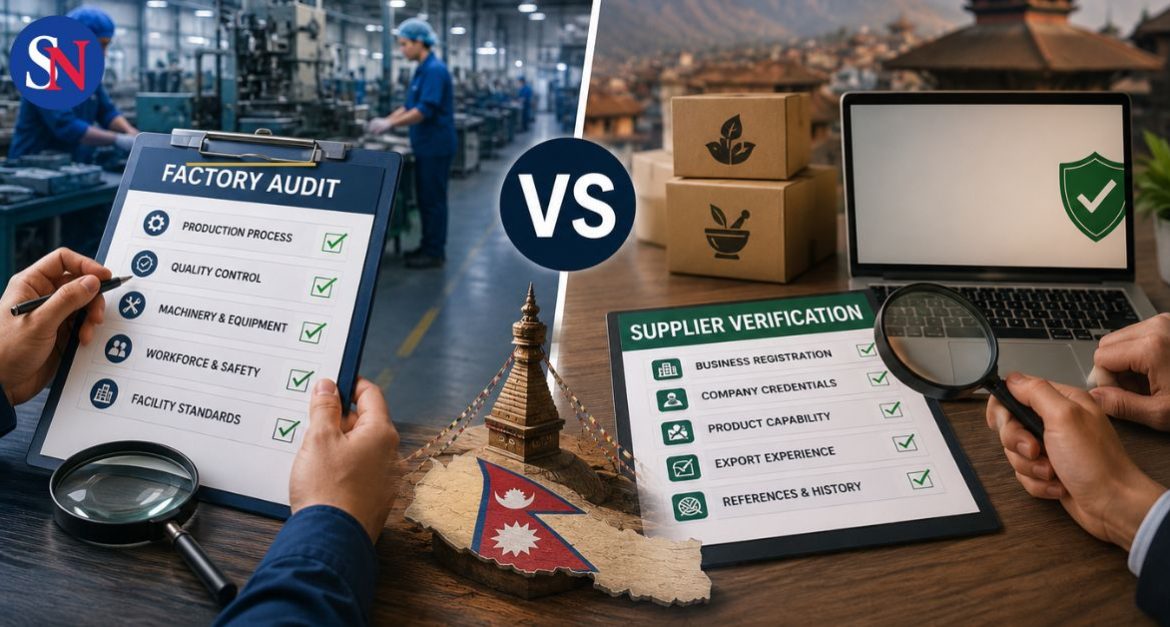
A typical supplier verification includes:
- Business registration verification
- Company ownership confirmation
- Factory or office location verification
- Product capability assessment
- Export experience review
- Production capacity overview
- Communication and responsiveness evaluation
- Basic compliance documentation review
The objective is simple: confirm that the supplier is a genuine business before moving forward.
For many first-time buyers, supplier verification is the first step in reducing sourcing risks.
What Is a Factory Audit?
A factory audit is a comprehensive on-site evaluation of a manufacturer’s operations.
Instead of only verifying the business, it examines whether the factory can consistently produce products that meet your quality, compliance, and delivery requirements.
A factory audit typically evaluates:
- Manufacturing processes
- Production capacity
- Machinery and equipment
- Quality control systems
- Raw material handling
- Workforce management
- Warehouse organization
- Health and safety practices
- Documentation systems
- Social and environmental compliance (where required)
Factory audits provide buyers with a detailed understanding of how a supplier operates and whether they can support long-term production.
Factory Audit vs Supplier Verification
| Supplier Verification | Factory Audit |
|---|---|
| Confirms the supplier is legitimate | Evaluates how the factory operates |
| Focuses on business credibility | Focuses on manufacturing capability |
| Usually conducted before placing initial orders | Often conducted before large or recurring orders |
| Faster and lower cost | More detailed and comprehensive |
| Ideal for first-time supplier screening | Ideal for long-term supplier partnerships |
Both services reduce risk, but they answer different questions.
Supplier verification answers:
“Is this a legitimate supplier?”
A factory audit answers:
“Can this supplier consistently manufacture my products?”
When Should You Choose Supplier Verification?
Supplier verification is often enough when you are:
- Contacting a supplier for the first time
- Ordering product samples
- Working with a trading company
- Comparing multiple Nepal suppliers
- Looking for new manufacturers
- Making relatively small purchases
For example, if you’re sourcing handmade felt products from a new supplier, verifying the company’s registration, production capabilities, and export history provides valuable confidence before requesting samples.
It helps buyers eliminate unreliable suppliers early in the sourcing process.
When Do You Need a Factory Audit?
A factory audit becomes more important when:
- You’re placing large-volume orders.
- You’re developing a private-label product.
- Product consistency is critical.
- Your customers require compliance documentation.
- You’re entering into a long-term manufacturing agreement.
- Retailers or distributors request supply chain transparency.
For instance, if you’re importing Himalayan Shilajit or herbal supplements under your own brand, a factory audit helps ensure that production processes and quality systems align with your expectations.
Can You Use Both Together?
Absolutely.
Many experienced importers begin with supplier verification to shortlist reliable manufacturers.
Once they identify the most suitable supplier, they conduct a factory audit before confirming a significant purchase order.
This approach provides two layers of protection:
- Verify the supplier’s legitimacy.
- Confirm the factory’s operational capability.
Combining both services significantly reduces sourcing risks and helps build stronger supplier relationships.
Common Mistakes Buyers Make
International buyers sometimes skip verification to save time or reduce costs. However, this can lead to expensive mistakes.
Common errors include:
- Choosing suppliers based only on price
- Relying solely on online listings
- Not verifying business registration
- Skipping factory assessments before large orders
- Assuming every exporter is also a manufacturer
- Overlooking production capacity and delivery capabilities
Taking the time to evaluate suppliers properly often prevents delays, quality issues, and unexpected costs.
How Sourcing Nepal Helps International Buyers
Evaluating suppliers from another country can be challenging, especially if you cannot visit Nepal in person.
Sourcing Nepal supports international buyers by offering:
- Supplier identification
- Supplier verification
- Factory audits
- Quality inspections
- Sample coordination
- Production monitoring
- Export documentation support
- Logistics coordination
Our local team works directly with manufacturers to provide transparent information, helping buyers make informed sourcing decisions with confidence.
Frequently Asked Questions About Sourcing from Nepal
Is supplier verification enough before placing an order?
How long does a factory audit take?
Can a trading company undergo a factory audit?
Do I need both supplier verification and a factory audit?
Conclusion
Choosing between a supplier verification and a factory audit depends on your sourcing goals, order size, and level of risk. Supplier verification helps confirm that you’re working with a legitimate and reliable business, while a factory audit provides a deeper understanding of a manufacturer’s production capabilities and quality systems.
For businesses sourcing from Nepal, using the right evaluation method at the right stage can reduce procurement risks, improve product quality, and build long-term supplier relationships.
Whether you’re importing herbs, spices, essential oils, handicrafts, Himalayan dog chews, or private-label products, Sourcing Nepal can help you identify trustworthy suppliers, verify their credentials, and conduct professional factory audits to support confident purchasing decisions.
📩 Ready to import from Nepal?
Contact us today for samples, pricing, or consultation:
🔗 www.sourcingnepal.com
📧 sourcing@sourcingnepal.com
📞 +977-9823900499