
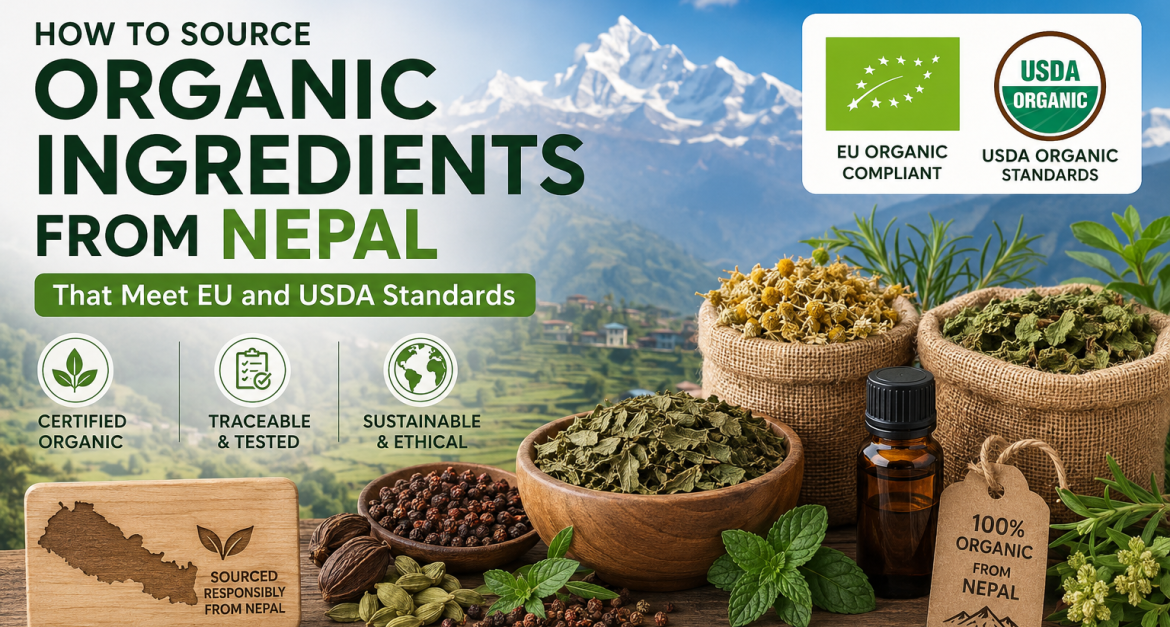
How to Source Organic Ingredients from Nepal That Meet EU and USDA Standards
Global demand for certified organic ingredients continues to grow as consumers seek clean-label, sustainable, and traceable products. Whether you’re manufacturing herbal supplements, natural cosmetics, organic teas, or functional foods, choosing the right supplier is critical. This is where sourcing from Nepal offers a unique advantage.
Nepal’s diverse climate, high-altitude regions, and traditional farming practices make it an excellent source of herbs, spices, medicinal plants, and essential oils. However, not every supplier can meet the strict requirements of European Union (EU) and USDA Organic standards. Understanding what to look for before placing an order can help you reduce compliance risks and build a reliable supply chain.
Why Nepal Is Emerging as a Source of Organic Ingredients
Nepal is home to thousands of medicinal and aromatic plant species, many of which grow naturally in the Himalayan region. Farmers often use traditional cultivation methods with limited synthetic inputs, creating favorable conditions for organic production.
Popular export products include:
- Timur (Sichuan pepper)
- Black cardamom
- Ginger
- Turmeric
- Lemongrass
- Chamomile
- Holy basil (Tulsi)
- Mint
- Essential oils
- Medicinal herbs
For international buyers, sourcing from Nepal offers access to unique botanicals that are increasingly difficult to source elsewhere while supporting sustainable rural livelihoods.
Understanding EU and USDA Organic Standards Before Sourcing from Nepal
Before selecting suppliers, buyers should understand the two most widely recognized organic certification systems.
The USDA National Organic Program (NOP) requires certified products to be produced without prohibited synthetic substances, genetically modified organisms (GMOs), or sewage sludge. Land used for organic crop production must generally be free from prohibited substances for at least three years before harvest.
Similarly, the EU Organic Regulation (EU) 2018/848 establishes strict rules for production, traceability, processing, labeling, and imports. Since 2022, exporters from non-EU countries must comply directly with EU organic requirements rather than relying solely on equivalent standards.
Although the two systems share many similarities, they differ in certain processing rules, documentation requirements, and import procedures.
What International Buyers Should Verify Before Sourcing from Nepal
Not every company advertising organic products is certified to export them internationally.
Reliable Nepal suppliers should provide:
- Current organic certificates
- Farm and processing facility information
- Product specifications
- Moisture and quality reports
- Laboratory testing, when applicable
- Consistent export history
Working with suppliers that maintain transparent documentation reduces sourcing risks and improves long-term reliability.
Common Organic Ingredients Exported from Nepal
Many buyers choose Nepal for ingredients used in food, wellness, and personal care products.
These include:
- Organic turmeric
- Organic ginger
- Organic black cardamom
- Organic lemongrass
- Organic peppermint
- Organic Tulsi
- Organic nettle
- Organic essential oils
- Organic herbal teas
- Wild-harvested medicinal herbs
These products are commonly used in dietary supplements, herbal infusions, cosmetics, aromatherapy products, and functional beverages.
Challenges Buyers Face When Importing Organic Ingredients
Even experienced importers may encounter several challenges.
Common issues include:
- Expired certifications
- Incomplete export documentation
- Inconsistent product quality
- Poor traceability
- Moisture variation
- Delayed harvest seasons
- Misunderstanding certification scope
These risks can often be minimized through supplier verification, pre-shipment inspections, and clear communication throughout the procurement process.
Best Practices for Sourcing from Nepal Successfully
To build a dependable sourcing strategy:
- Verify certifications before placing an order.
- Request recent laboratory test reports.
- Confirm harvesting and production timelines.
- Review packaging and labeling requirements for your destination market.
- Conduct quality inspections before shipment.
- Partner with an experienced sourcing company that understands export regulations.
Following these steps helps ensure products meet both regulatory requirements and customer expectations.
How Sourcing Nepal Supports Organic Ingredient Buyers
Managing international procurement requires time, technical knowledge, and local expertise.
Sourcing Nepal assists global buyers by:
- Identifying verified Nepal suppliers
- Coordinating product samples
- Verifying certifications
- Conducting quality inspections
- Managing supplier communication
- Preparing export documentation
- Coordinating international logistics
This end-to-end approach helps buyers simplify procurement while maintaining quality and compliance.
Frequently Asked Questions About Sourcing from Nepal
Can Nepal export certified organic herbs to the EU?
Does USDA Organic certification automatically meet EU requirements?
What documents should I request before importing organic ingredients?
Why should I work with a sourcing company in Nepal?
Conclusion
Finding certified organic ingredients requires more than comparing prices. Buyers should evaluate certifications, traceability, testing, supplier reliability, and export readiness before committing to large orders.
When sourcing from Nepal, partnering with experienced professionals can simplify supplier verification, quality control, and international logistics while ensuring your organic ingredients meet the expectations of EU and USDA markets. Whether you’re importing herbs, spices, essential oils, or medicinal botanicals, Sourcing Nepal can help you build a transparent and compliant supply chain.
📩 Ready to import from Nepal?
Contact us today for samples, pricing, or consultation:
🔗 www.sourcingnepal.com
📧 sourcing@sourcingnepal.com
📞 +977-9823900499