
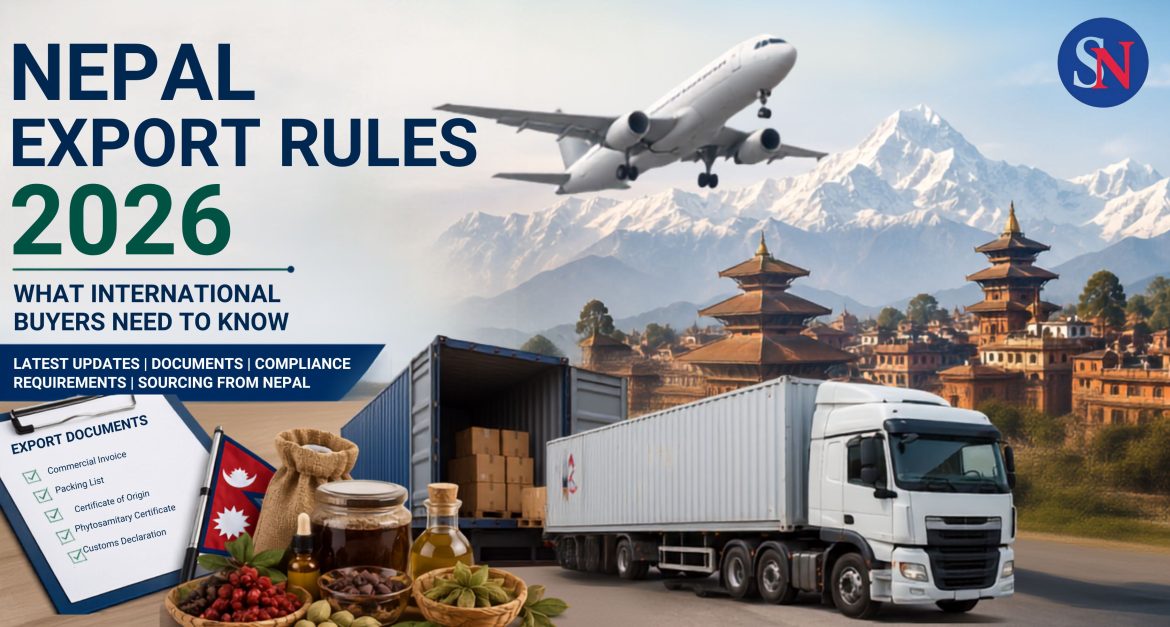
Nepal Export Rules 2026: What International Buyers Need to Know
Nepal is placing greater emphasis on expanding exports, diversifying products and making international trade more efficient. In 2026, several developments in Nepal’s customs administration, export procedures and trade strategy are important for businesses looking to source products from Nepal.
For international buyers, understanding these changes is important before placing orders for products such as herbs, spices, essential oils, handicrafts, felt products, Himalayan wellness products and other Nepali goods.
Rather than introducing one completely new export law, Nepal’s current export environment is being shaped by updates to customs procedures, EXIM administration, documentation requirements and the government’s broader export strategy.
Here’s what international buyers should know about Nepal export rules in 2026.
What Has Changed in Nepal’s Export Environment in 2026?
Nepal’s export framework continues to evolve as the government focuses on increasing exports and reducing the country’s trade deficit.
The Department of Customs is continuing its customs modernization program, including digital systems and electronic services for traders. Nepal’s official EXIM portal allows businesses to register for a new EXIM Code and renew existing EXIM Codes through an online system.
At the same time, the government has updated its national work plan for reducing the trade deficit and increasing exports. The updated strategy aims to increase production, improve productivity, diversify export products and markets, and reduce trade and transit costs.
For buyers, these developments mean that working with an exporter who understands documentation and compliance is becoming increasingly important.
1. Export Incentives Have Changed
One of the most important developments affecting Nepalese exporters is the change in the country’s export incentive system.
Nepal previously operated an export subsidy framework that provided incentives to eligible exporters. The government has now moved away from the previous Export Subsidy Procedure, 2075, changing the environment in which exporters plan their pricing and international sales.
This is particularly relevant for industries where margins can already be affected by raw-material costs, transportation and international logistics.
The change means exporters and international buyers should not automatically assume that a quotation from a Nepali supplier includes or depends on an existing government export subsidy.
Instead, buyers should evaluate the actual product cost, processing, packaging, documentation and logistics involved in fulfilling the order.
2. EXIM Code Remains an Important Part of Exporting
Businesses involved in international trade in Nepal need to work through the country’s Importer Exporter System.
Nepal’s Department of Customs provides an online EXIM portal for obtaining a new EXIM Code and renewing an existing one. The system is connected with other government and financial-service portals involved in international trade.
For international buyers, this creates an important supplier-verification question:
Does the Nepali company handling your export have the appropriate registration and export capability?
Before placing a commercial order, buyers should confirm that the supplier is properly registered and capable of completing the required export procedures.
This is especially important when sourcing from smaller producers or manufacturers that may have strong products but limited experience with international shipments.
3. Export Documentation Still Matters
Exporting from Nepal requires more than simply preparing the products and handing them to a logistics company.
Depending on the product and destination, exporters may need documents such as:
- Commercial invoice
- Packing list
- Customs export declaration
- Certificate of Origin
- Bank/payment documentation
- Enterprise registration documents
- Product-specific certificates
- Phytosanitary certificates for applicable agricultural products
- Other certificates or clearances required by the destination market
Nepal’s Trade and Export Promotion Centre identifies the Certificate of Origin as an important export document and provides information on export procedures.
For agricultural and plant-based products, additional requirements may apply. Nepal’s export-promotion documentation also identifies phytosanitary certification for applicable agricultural products and plants.
This means the exact export documentation depends on what you are buying, where it is going and how it is classified.
4. Product-Specific Requirements Can Be Different
One of the biggest mistakes international buyers make is assuming that every product follows exactly the same export process.
It doesn’t.
For example, an order of handmade felt products may involve very different documentation from an order of herbs, essential oils or agricultural products.
5. Key Documents for Exporting From Nepal
The exact documents depend on the product and destination, but international buyers commonly need:
- Commercial invoice
- Packing list
- Customs export declaration
- Certificate of Origin
- Product-specific certificates, where required
- Phytosanitary certificates for applicable agricultural products
Nepal’s Trade and Export Promotion Centre provides guidance on export procedures and Certificates of Origin.
Before placing an order, buyers should confirm with the exporter which documents will be provided and whether additional documents are required by the destination country.
6. What International Buyers Should Check
Understanding Nepal export rules 2026 is only the first step. Buyers should also verify:
Supplier: Is the exporter properly registered and able to handle international shipments?
Product: Are the specifications, grade, quantity and packaging clearly agreed?
Testing: Are COA, laboratory reports or other certificates available when required?
Compliance: Does the product meet the import requirements of the destination country?
Quality: Can a pre-shipment inspection be arranged before the goods leave Nepal?
These checks can help prevent documentation problems, quality disputes and shipment delays.
7. How Sourcing Nepal Can Help
For international buyers, sourcing directly from multiple Nepali suppliers can involve significant coordination.
Sourcing Nepal helps international businesses identify and work with Nepali suppliers while supporting different stages of the sourcing process, including supplier verification, product sourcing, sample coordination, quality checks, testing and export logistics.
This can be particularly useful when sourcing products such as:
- Himalayan herbs and botanicals
- Shilajit
- Spices and large cardamom
- Essential oils
- Nepali food products
- Felt and handicrafts
- Lokta paper
- Pet products
The exact requirements vary by product and destination, but having a sourcing partner can make the process easier to manage.
Frequently Asked Questions About Sourcing from Nepal
What are the Nepal export rules in 2026?
Do Nepali exporters need an EXIM Code?
What documents are needed to export from Nepal?
Can international companies source products directly from Nepal?
Are export requirements the same for every product?
Final Thoughts
Nepal’s export environment is evolving through customs modernization, changes in export procedures and a stronger focus on increasing international trade.
For international buyers, this creates both opportunities and responsibilities. Nepal offers a growing range of distinctive products, from Himalayan herbs and spices to handicrafts, essential oils and specialty food products.
The key to successful sourcing from Nepal is choosing reliable suppliers, understanding documentation requirements and making sure products meet the regulations of the destination market.
If you are looking to source products from Nepal, Sourcing Nepal can help you identify suppliers, coordinate samples, support quality and documentation processes, and manage the sourcing and export process.
📩 Ready to import from Nepal?
Contact us today for samples, pricing, or consultation:
🔗 www.sourcingnepal.com
📧 sourcing@sourcingnepal.com
📞 +977-9823900499